

Dry Leak Test Machine
Dry Leak Testing Machine: Enhancing Industrial Precision & Manufacturing Reliability
Maintaining product quality and preventing leakage-related failures are essential for operational efficiency in modern manufacturing. A dry leak testing machine provides a reliable method for identifying leaks without using liquids. It makes it suitable for industries where cleanliness and accuracy, along with speed, are crucial.
Dry leak testing uses air or gas pressure to measure leak levels. The technology allows manufacturers to detect even minor defects while maintaining a clean testing environment. Industries such as automotive and electronics, in addition to medical equipment and engineering, rely on advanced leak detection solutions to improve product reliability.
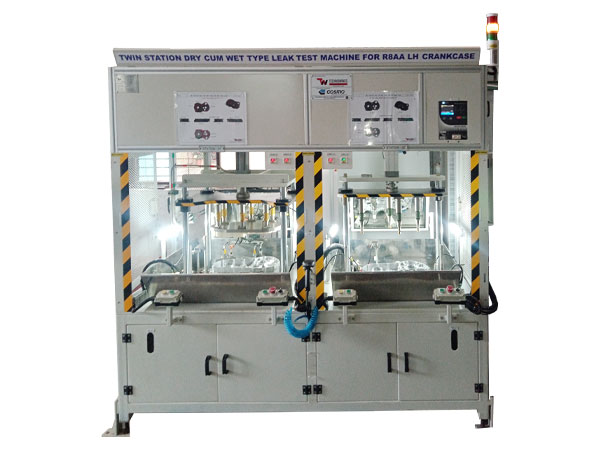
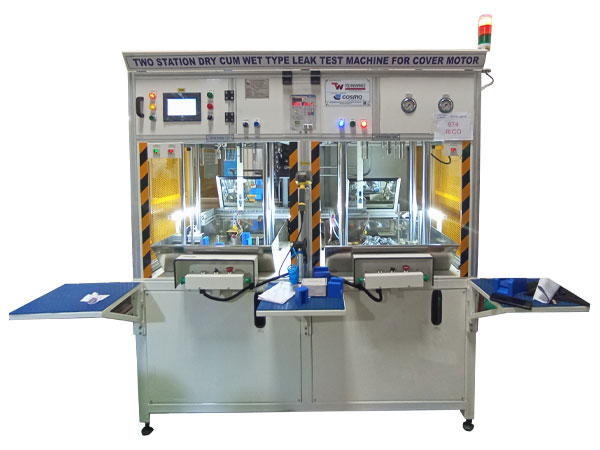
Dry Leak Test Machine: Technical Methodologies & Equipment Types
A dry leak testing machine works by introducing air or a test gas into a component and monitoring changes during the testing cycle. The system determines whether a product meets predefined leakage limits. Some common testing methodologies include the following.
- Pressure decay testing: Pressure decay testing fills the component with air at a specific pressure and monitors the pressure loss over time. The system detects a leak if the pressure drops beyond an acceptable range. The method is widely used because it is simple and cost-effective as well as suitable for many applications.
- Mass flow testing: Mass flow testing measures the amount of air passing through a component. The airflow changes when a lead exists. It allows the machine to calculate the leakage rate accurately. The method is especially effective for components requiring higher sensitivity.
- Vacuum leak testing: Vacuum-based methods create negative pressure conditions and detect changes caused by air entering the tested component. The technique is useful for sealed products and sensitive assemblies.
Specialized Technical Variants of Dry Leak Testing Equipment
A duct leak test machine is designed specifically for checking air leakage in duct systems used in HVAC and ventilation, as well as industrial airflow applications. These systems help verify sealing over performance and ensure energy efficiency. Other dry leak testing variants include the following.
- Automated production line leak testers
- High-pressure leak detection systems
- Precision micro-leak testing equipment
- Multi-channel testing systems
- Custom-designed inspection machines
Essential Features That Prevent False Failures on the Shop Floor
The following are the essential features.

Temperature Compensation
Advanced machines include temperature monitoring and compensation systems to maintain accurate test results.

Automatic Calibration
Calibration helps maintain measurement accuracy and reduce errors caused by equipment variation.

Precise Sensors
High-quality pressure and flow sensors improve detection capabilities and help identify small leakage rates.

Data Monitoring & Reporting
Digital systems allow manufacturers to record test results, track performance, and analyze quality trends.
Final words
Technowings Automation India Pvt. Ltd provides industries with high-performance dry leak testing machines that enhance production quality, accuracy, and dependability. Manufacturers in Pune and throughout India may improve their quality assurance processes with tailored designs and cutting-edge technologies.
FAQs
Changes in temperature might affect the air pressure within a test component. Temperature compensation techniques are used by modern dry leak testing equipment to ensure reliable data.
A mass flow test gauges the volume of air passing through a leak, whereas a pressure decay test tracks pressure loss within a component over time. For smaller leaks, mass flow testing typically offers more sensitivity.
Indeed. By modifying pressure levels, testing procedures, and fixture designs, several sophisticated dry leak testers can be set up for flexible materials.
The automobile, medical device, electronics, aerospace, HVAC, packaging, and industrial production industries all use dry leak testing equipment.
Faster testing, clean operation, excellent accuracy, decreased waste, and simple integration into automated production lines are some of the main benefits.